You’re Sitting on a Fertilizer Mine… You Just Can’t Access It
Hope Isn't a Fertility Program
You’re watching the markets.
Waiting. Running numbers. Trying to make sense of what next year is going to look like.
Hoping fertilizer prices come down.
But deep down, you already know the truth.
Hope isn't a strategy.
And it's definitely not a fertility program.
The Problem No One Wants to Say Out Loud
Every year, the same conversation comes up:
“Maybe next year input prices will settle down.”
“Maybe things will get back to normal.”
But let’s ask a better question…
When was the last “normal” year?
Fertilizer prices spike.
Supply chains tighten.
Margins get thinner.
And now we’re seeing something even more concerning:
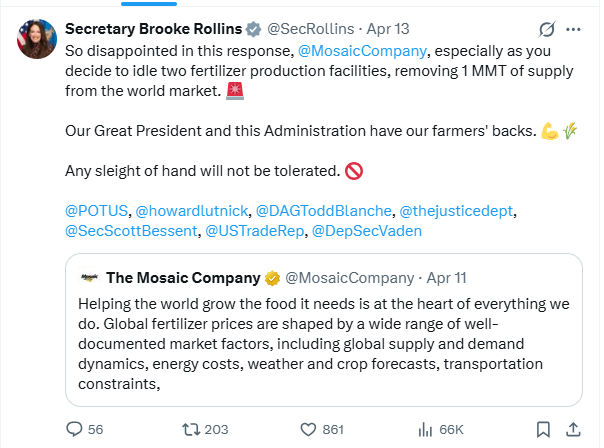
Mines are shutting down because they can’t afford to produce at today’s prices. @MosaicCompany @Secretary Brooke Rollins
You Have Two Choices
Right now, every operation is facing the same decision whether they realize it or not.
Option 1
Hope prices come down.
Hope inputs get cheaper.
Hope next year works out.
Option 2
Build a system that works regardless of what the market does.
Because hoping your soil mineralizes is not a strategy either.
What If You Already Have What You Need
This is where the thinking has to shift.
What if the real opportunity is not buying fertilizer cheaper, but needing less of it in the first place?
Not by cutting corners. Not by risking yield. But by understanding what is already sitting in your soil and figuring out how to use it. Because here is what most people do not realize.
You are already sitting on decades of fertility.
On average:
1,500 - 3,000 plus pounds per acre of phosphate
25,000 plus pounds per acre of potash
That is not a supply issue.
That is an access issue.
Open Your Own "Fertilizer Mine"
What if you stopped chasing price and started thinking about access?
That is the shift. We are not telling you to eliminate fertilizer completely. We are not saying you should gamble with your yields. We are telling you to build a system where your soil actually releases what it already has. Essentially, you can open your own fertilizer mine.
The nutrients are there. The question is whether your current system is allowing the plants to use them.
This is Already Happening.
This is not theory anymore.
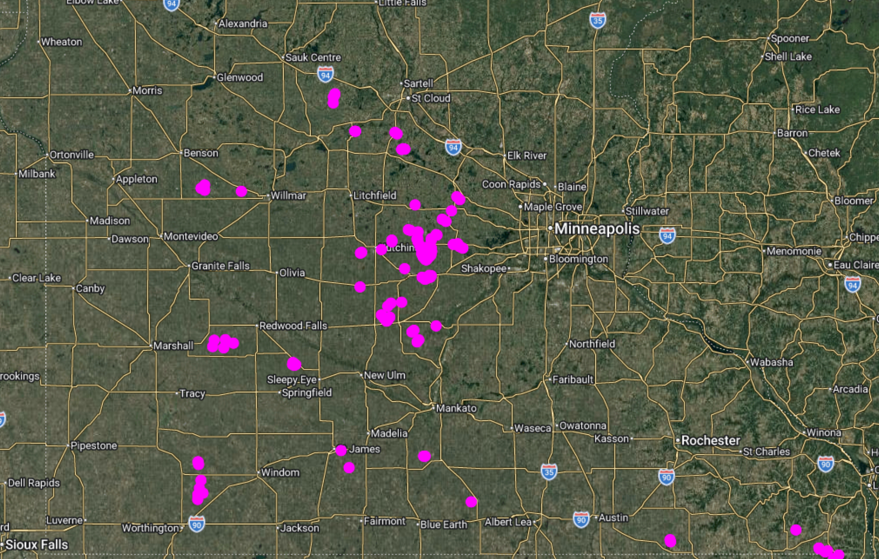
This is happening right now across real farms and real acres around the United States. And we've now proven it works in Minnesota.
- Ide Seed has more than 100 customers are already implementing this approach.
- Over 7,500 new acres are being managed this way this year.
- On average, operations are saving around $50-100+ per acre on fertilizer without sacrificing yield.
This map shows that it is not isolated to one area either. It is growing, and it is working in a wide range of conditions.
Quit Farming Like It's 1970.
Look at your operation today compared to 20, 30, or 50 years ago.
Your equipment has changed.
Your genetics have improved.
Your technology is more advanced than ever.
Now ask yourself this: What else are you still doing the same way you did decades ago?
For a lot of operations, fertility management is near the top of that list. The same style of soil testing. The same type of recommendations. The same general approach.
Everything else evolved. This did not.
So the real question becomes simple: Why are we still guessing?
More < Access
This is where most people get stuck.
They think the answer is putting more on. More fertilizer, more products, more inputs. But that approach only works if the plant can actually access what is there.
Nutrient conversion is biological.
If your biology is not working, your fertility is not working. It does not matter how much you apply if the system cannot make it available to the plant.
So the goal is not to pile more on top. The goal is to make what is already there usable.

This is Bigger Than Saving Money
Saving $50-100+ per acre matters. There is no question about that. But that is not the biggest opportunity.
The bigger opportunity is control.
When you rely less on outside inputs and volatile markets, you gain more control over your costs, your consistency, and your outcomes. You are no longer at the mercy of price swings or supply issues in the same way.
That changes how you farm. It changes how you plan. And it changes how you manage risk.
When Opportunity Shows Up
There is a quote that fits this perfectly.
"When opportunity comes, it is too late to prepare for it." -John Wooden
The farmers who win over the next few years will not be the ones who waited for prices to drop or conditions to improve.
They will be the ones who built a better system before they were forced to.
The Bottom Line
You can keep hoping things change. Or you can start building a system that works.
Because this is already being proven. Across Minnesota. Across real acres. With real results.
Field by field, more operations are figuring out how to unlock what is already in their soil instead of depending on what they have to buy.
The map is filling up. So the question is not whether this works.
The question is simple: Are you going to be part of it?